
Blog
What Age is a High Sleeper Suitable For? Your Parent Guide to Transitioning Your Child to High Sleeper Beds
Feb
Children’s High sleeper beds, as the name suggests, is an elevated bed with a lot of space underneath due to the height the bed is from the ground. With so much space underneath, Kids high beds are often designed with desks, wardrobes, sofa and pullout beds, reducing the need for extra furniture in your child’s bedroom. High sleeper beds create the perfect space for sleep, study, and play, making them a perfect fit for families looking to maximize space and functionality in one’s bedroom, especially in smaller rooms. These beds are a stylish choice that can complement any bedroom style, from modern to traditional, and can be easily adapted to suit your little one’s bedroom decor. High sleeper beds are a great option for optimizing one’s bedroom, regardless of its size, and are high sleeper beds suitable for older kids who need more floor space and more storage space.
The bed is situated at the top of the ladder, so it is important to consider if your child will be able to safely negotiate the ladder both up and down. Choosing the right bed for your child means considering their age, needs, and safety. The main difference between a high sleeper and a standard bunk bed is that a high sleeper bed has a single raised bed with usable space underneath for storage, study, or relaxation, while a standard bunk bed has two beds stacked on top of each other. However, most children love the idea of sleeping in a high sleeper or bunk bed.
When should I invest in a high sleeper bed?
Most manufacturers recommended age for a high sleeper bed is 6 years old. This is due to safety regulations and the design being accessed by either a ladder or steps, however it is always worth checking the individual product detail pages for specific safety guidelines.
You need to wait until your child is past the stage where falling out of a bed is a potential danger as a high sleeper is considerably higher than a standard bed. Also, if your child is prone to getting up in the middle of the night it is advised that you wait until they reach an age that you believe they will be confident to climb down the ladder at night safely.
Manufacturers offer clear guidelines for proper use to ensure that your child remains free from accident or harm. Due to their extra height as compared to a traditional single bed, high sleepers do propose a greater risk of an accident if they are not used properly, so it’s important to run through the guidelines with your child and only move your child into a high sleeper when you believe it is appropriate for your child. As long as safety guidelines are followed correctly, there is no danger to your child.

What are the floor space benefits of a high sleeper?
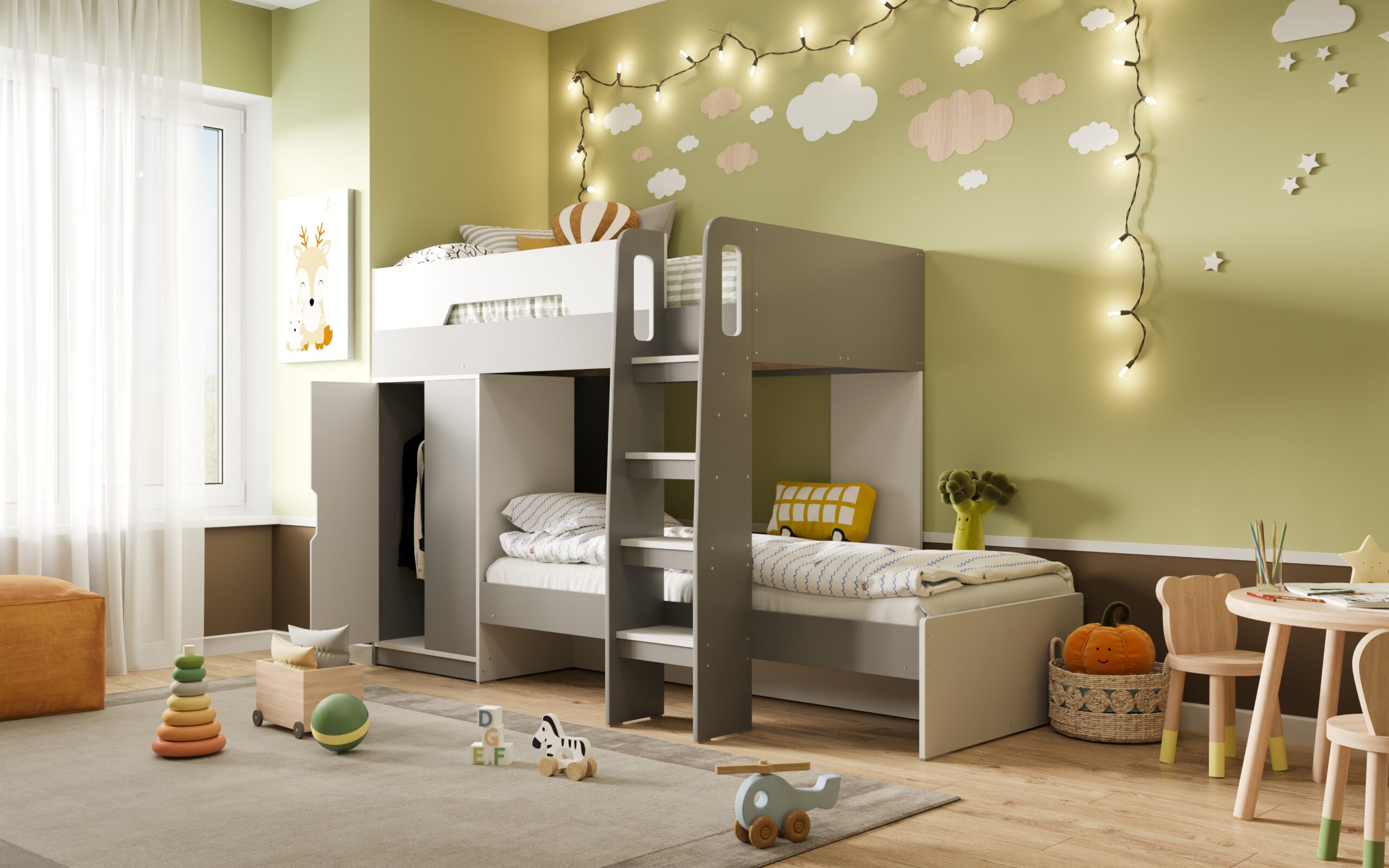
Children’s High sleeper beds provide maximum storage solutions and usable space that can be changed and adapted as your child grows up. You can shop for beds based on the other additional features you need in your child’s bedroom, such as beds that include wardrobes, draws, shelving, storage boxes, seating areas or even a spare bed. A high sleeper offers more usable space underneath the bed for older children in comparison to mid sleepers as they can often include desks which are highly flexible and versatile spaces as and when your child becomes more independent.
High sleepers that incorporate essential storage and furniture reduce the need for additional furniture in your kids bedrooms. Meaning you can optimise how your kids use their room and incorporate more functional space whatever that need may be.
High sleeper beds offer excellent bed and storage solutions for any kids bedroom, however, it is important to consider what you and your child need from their bed to provide the ultimate space-saving solution before you invest.
Safety Considerations
When introducing a high sleeper bed into your child’s bedroom, safety should always come first. High sleeper beds are designed to be safe and practical for children aged 6 and above, but it’s important to take a few extra steps to ensure your child’s sleeping area remains secure and comfortable.
- Ladder safety: Make sure the ladder is firmly attached to the bed frame and is easy for your child to climb up and down. Teach your child to use the ladder properly and remind them that it’s not for playing or jumping.
- Guard rail protection: A sturdy guard rail is essential for any raised sleeping area. Check that the guard rail is securely fitted and high enough to prevent your child from rolling out of bed during the night.
- Mattress fit: Use a mattress that fits the bed frame exactly. The mattress should not be too thick—ideally, the top of the mattress should sit at least 160mm below the top of the guard rail to keep the sleeping area safe.
- Ceiling clearance: Position the high sleeper bed so there’s enough space between the top bunk and the ceiling, including any overhead lights or fans. This helps prevent bumps and injuries when your child sits up in bed.
- Regular checks: It’s a good idea to regularly check the bed frame, ladder, and guard rail for any signs of wear or loose fittings. Tighten any screws or bolts as needed to keep the bed sturdy and safe.
- Supervision and rules: Especially for younger children, supervise them as they get used to their new bed. Remind them that only one person should be on the high sleeper at a time, and that the area underneath—whether it’s a desk, play area, or storage—should be kept tidy and safe.
- Desks and play areas underneath: If your high sleeper bed includes desks underneath or a play area, make sure these are securely attached to the bed frame and free from hazards. This ensures the space beneath the bed is as safe as the sleeping area above.
By following these safety tips and regularly checking your child’s high sleeper bed, you can create a secure and comfortable environment that makes the most of your child’s bedroom space. Always refer to the manufacturer’s instructions for assembly and maintenance to keep your high sleeper beds safe and suitable for your growing child.
Frequently Asked Questions (FAQs) About High Sleeper Beds
What age is a high sleeper bed suitable for?
High sleeper beds are generally recommended for children aged 6 years and above. This age guideline ensures that children have the physical coordination and confidence to safely climb the ladder and use the bed without risk.
Are high sleeper beds safe for children?
Yes, high sleeper beds are safe when used according to the manufacturer’s instructions. It is important to ensure the bed has a sturdy guard rail, the mattress fits correctly, and that children follow safety rules such as not playing on the bed or ladder.
How much mattress thickness is safe for a high sleeper bed?
The mattress should ideally be no thicker than 15 to 16 cm to ensure the mattress sits below the guard rail, preventing your child from rolling out during sleep.
Can high sleeper beds be used in small bedrooms?
Absolutely. High sleeper beds are designed to maximize floor space, making them ideal for smaller bedrooms by creating usable space underneath for storage, study areas, or play zones.
What can I put underneath a high sleeper bed?
The space beneath a high sleeper bed is versatile and can be used for built-in desks, wardrobes, drawers, shelves, play areas, or even sofa beds, depending on your child’s needs and room size.
How much clearance should be left between the mattress and the ceiling?
It’s recommended to leave at least 60 cm (about 2 feet) of space between the top of the mattress and the ceiling to prevent your child from bumping their head when sitting up.
Can a high sleeper bed grow with my child?
Yes, many high sleeper beds are designed to adapt to your child’s changing needs, offering flexible space underneath for study, storage, or relaxation, making them suitable through the teenage years.
Should children play on the high sleeper bed?
No, high sleeper beds are intended for sleeping only. Playing on the bed or ladder increases the risk of falls and injuries.
How often should I check the bed for safety?
Regularly inspect the bed frame, ladder, guard rails, and fittings to ensure everything is secure and in good condition. Tighten screws and bolts as needed to maintain safety.
Can more than one child use a high sleeper bed at the same time?
For safety reasons, only one child should be on the high sleeper bed at a time. This helps prevent accidents and ensures the bed’s structural integrity.
